
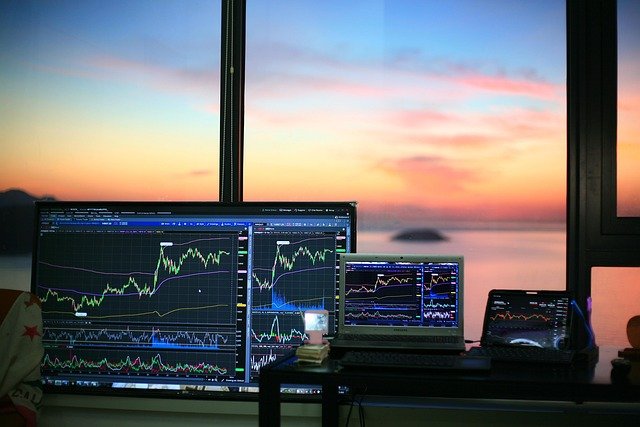
In 2026, the financial sector has reached a tipping point. Quantum Computing is no longer a laboratory experiment; it is the engine driving the world’s most sophisticated trading floors. For global investment banks and hedge funds, the quest for “Quantum Advantage” has become the ultimate competitive edge.
Portfolio Optimization and Risk Management
By 2026, quantum algorithms have solved computational bottlenecks that previously took classical supercomputers days to process, enabling real-time risk assessment and market volatility prediction.
1. Quantum Monte Carlo Simulations
- Real-Time Assessment: Banks use quantum-accelerated simulations to price complex derivatives and assess Value at Risk (VaR) in seconds.
- Volatility Analysis: Quantum processors analyze multi-dimensional market correlations with unprecedented accuracy.
2. The Quantum-Resistant Infrastructure
By 2026, major central banks have completed the transition to Post-Quantum Cryptography (PQC) and Quantum Key Distribution (QKD) to ensure global financial security against future threats.
Frequently Asked Questions (FAQs)
Is quantum computing replacing classical computers?
No. In 2026, banks use a hybrid model where quantum processors act as accelerators for specific, complex mathematical tasks.
How does this affect retail investors?
Increased market efficiency and better risk management lead to more stable retirement products and lower-cost ETFs.
Disclaimer: This article is for informational purposes only and does not constitute financial or technical investment advice.